Your money never sits with us. It goes straight to your wallet.
PYMSTR never touches your money. Payments flow directly from customer to your wallet on-chain. Nothing to hack, nothing to freeze.
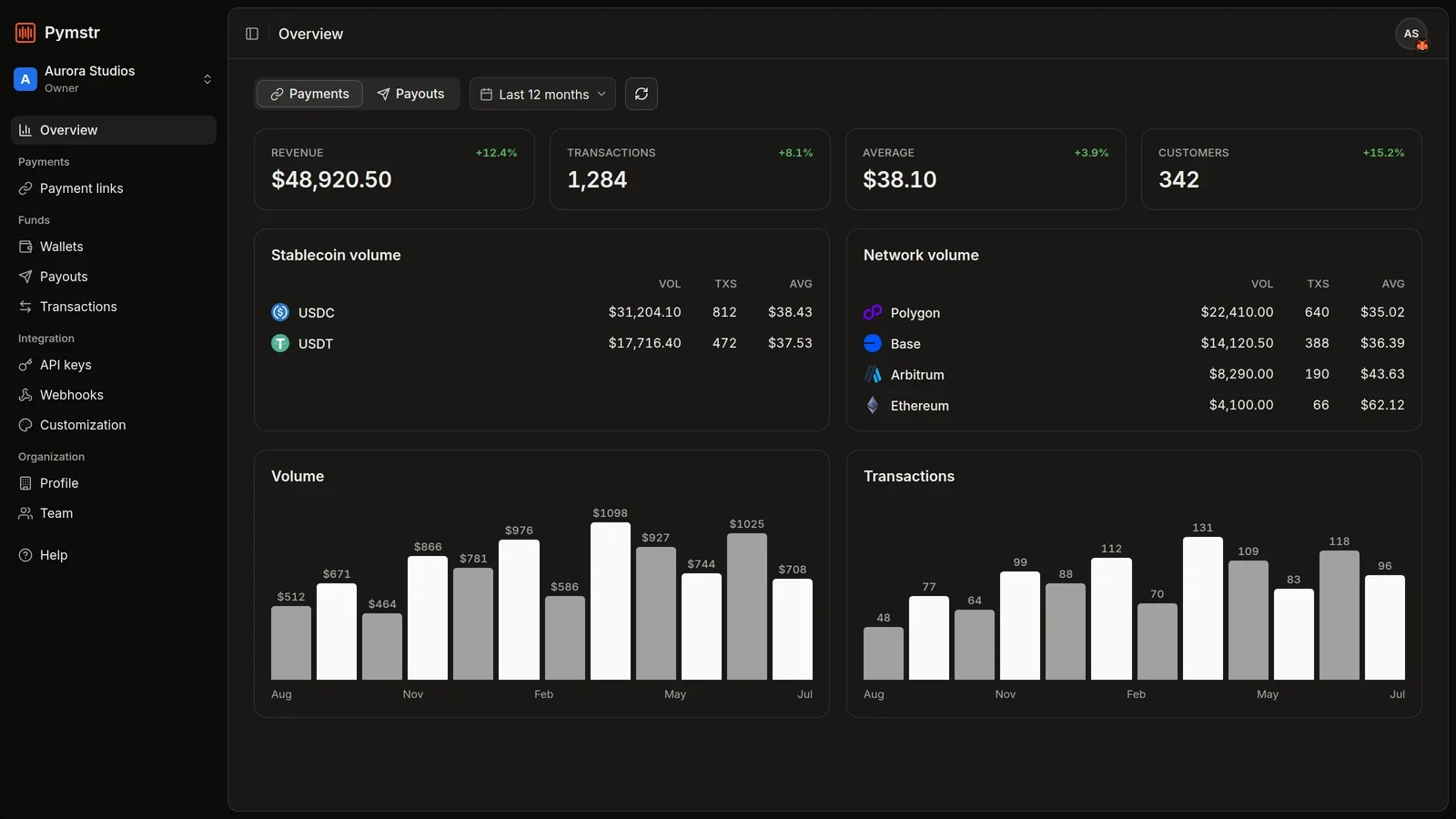
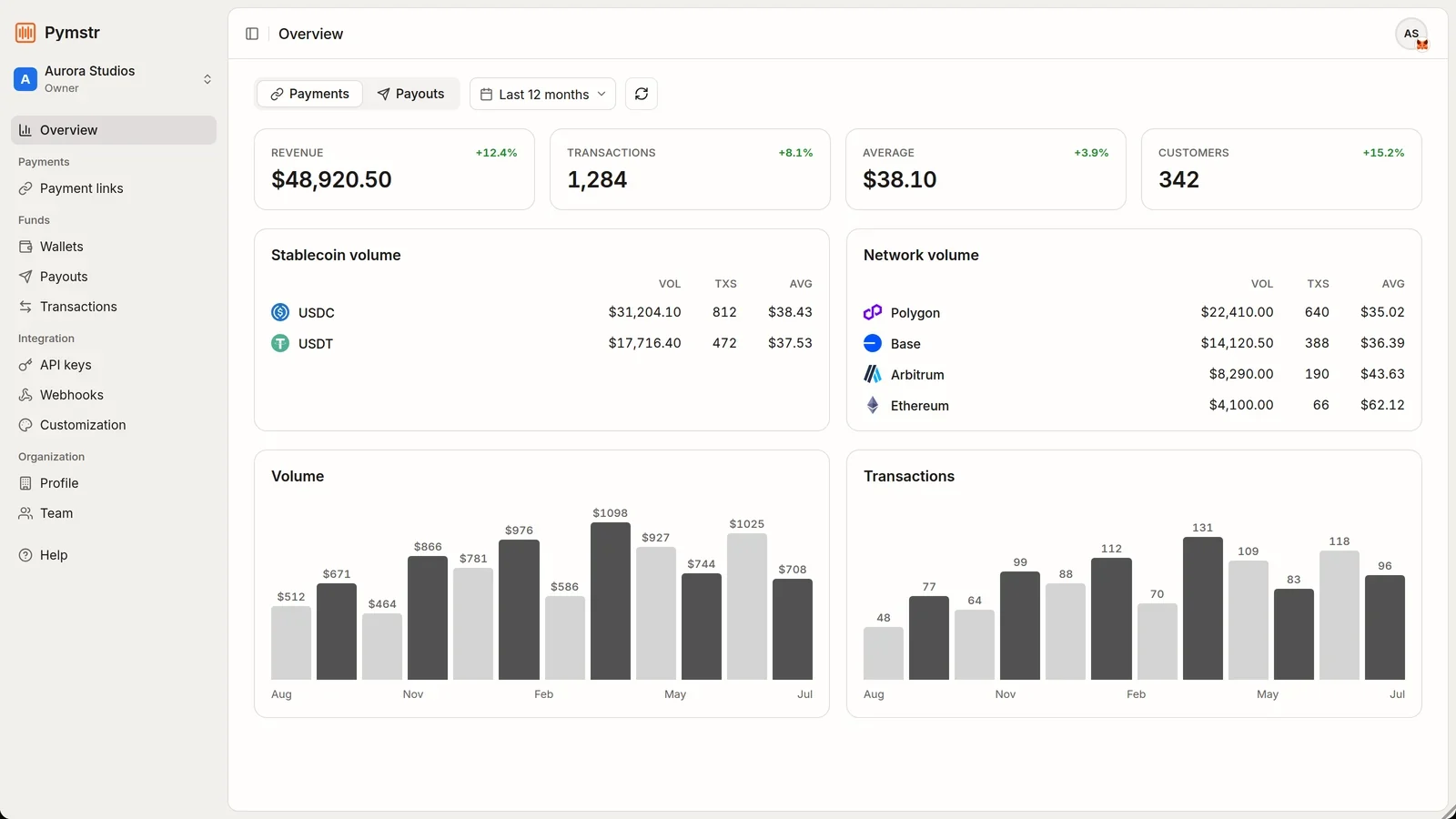
Why this exists
Most crypto processors collect your customers' payments into their own accounts first, then pay you out later. While they hold it, your money can be hacked, frozen, or delayed. CoinsPaid lost $44.5M this way across 2023 and 2024, and Alphapo lost $60M in 2023.
PYMSTR is non-custodial by design. We never hold, store, or have access to merchant funds. Payments flow directly from the customer's wallet to yours on-chain. There's no pool of funds for hackers to target, no intermediary that can freeze your account.
Three steps, on-chain.
Customer initiates payment
The customer signs in and selects their payment amount, stablecoin, and chain.
Payment executes on-chain
A smart contract transfers stablecoins directly from the customer's wallet to your wallet.
Funds arrive in your wallet
USDC or USDT arrives in your wallet in 2-15 seconds. PYMSTR never has access to these funds.
What you get.
Zero Hack Risk
PYMSTR has no pooled funds to steal. Even if our infrastructure were compromised, your funds are safe in your own wallet.
No Account Freezes
Custodial processors can freeze your account at any time. Non-custodial means your funds are always under your control.
Instant Access
No settlement delays. Funds are in your wallet the moment the transaction confirms. Use them immediately.
Reduced Regulatory Burden
Because PYMSTR never holds funds, the regulatory requirements are fundamentally different from custodial processors that need money transmitter licenses.
Short answers. No jargon.
Non-Custodial Architecture questions.
Non-custodial means PYMSTR never holds, stores, or controls your funds at any point. Payments flow directly from the customer's wallet to your wallet on the blockchain. We facilitate the transaction but never touch the money.
Add stablecoin payments to your checkout.
0.5% flat. No chargebacks. Money lands in your own wallet in seconds.