Stablecoin payment chargebacks? There are none.
Stablecoin payment chargebacks don't exist. Once an on-chain USDC or USDT transaction confirms, there is no chargeback flow, no dispute fees, and no reserve held against you. PYMSTR is not a buyer-protection layer. Use it for payments that should be final, the way you'd use a bank transfer.
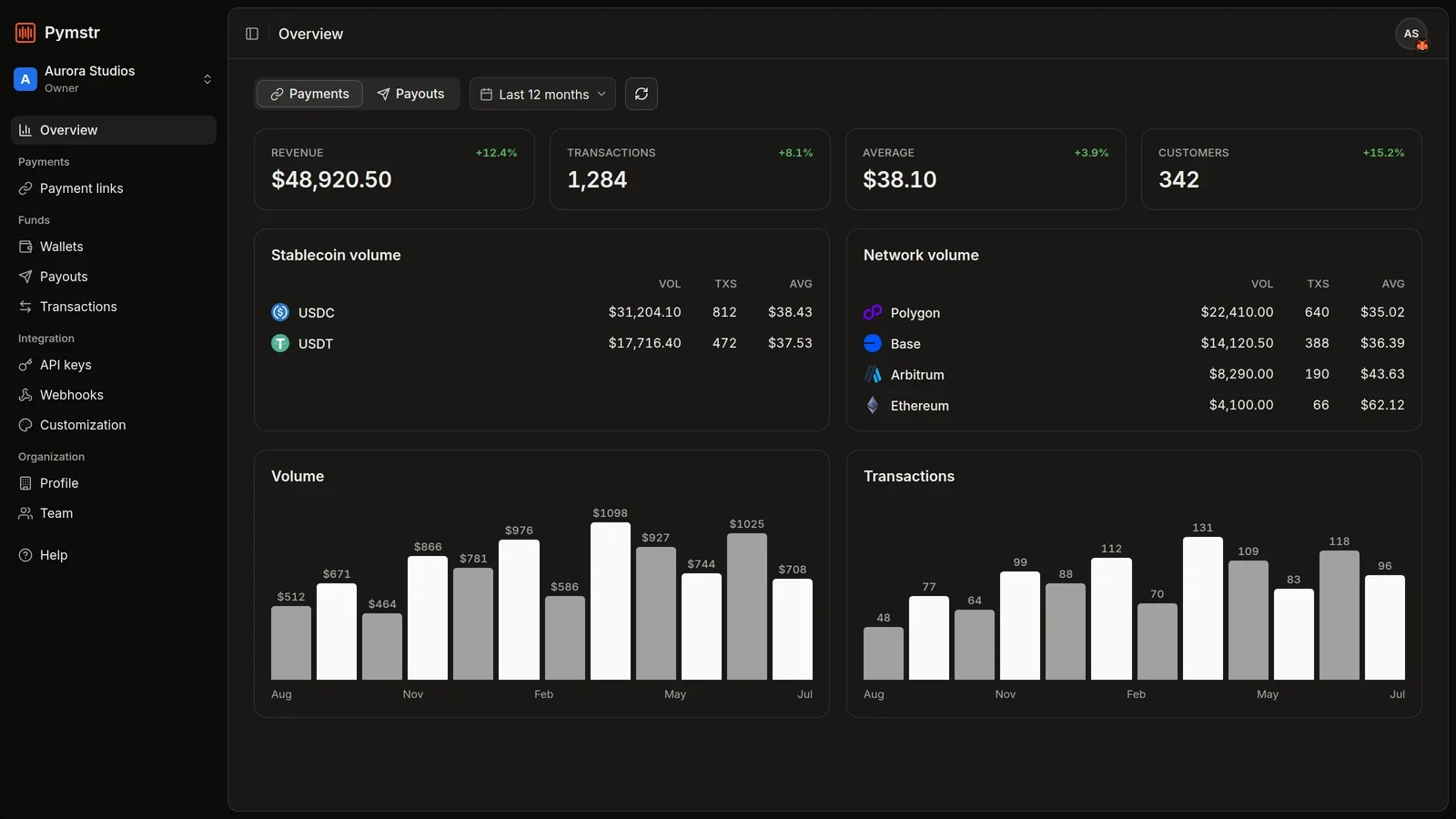
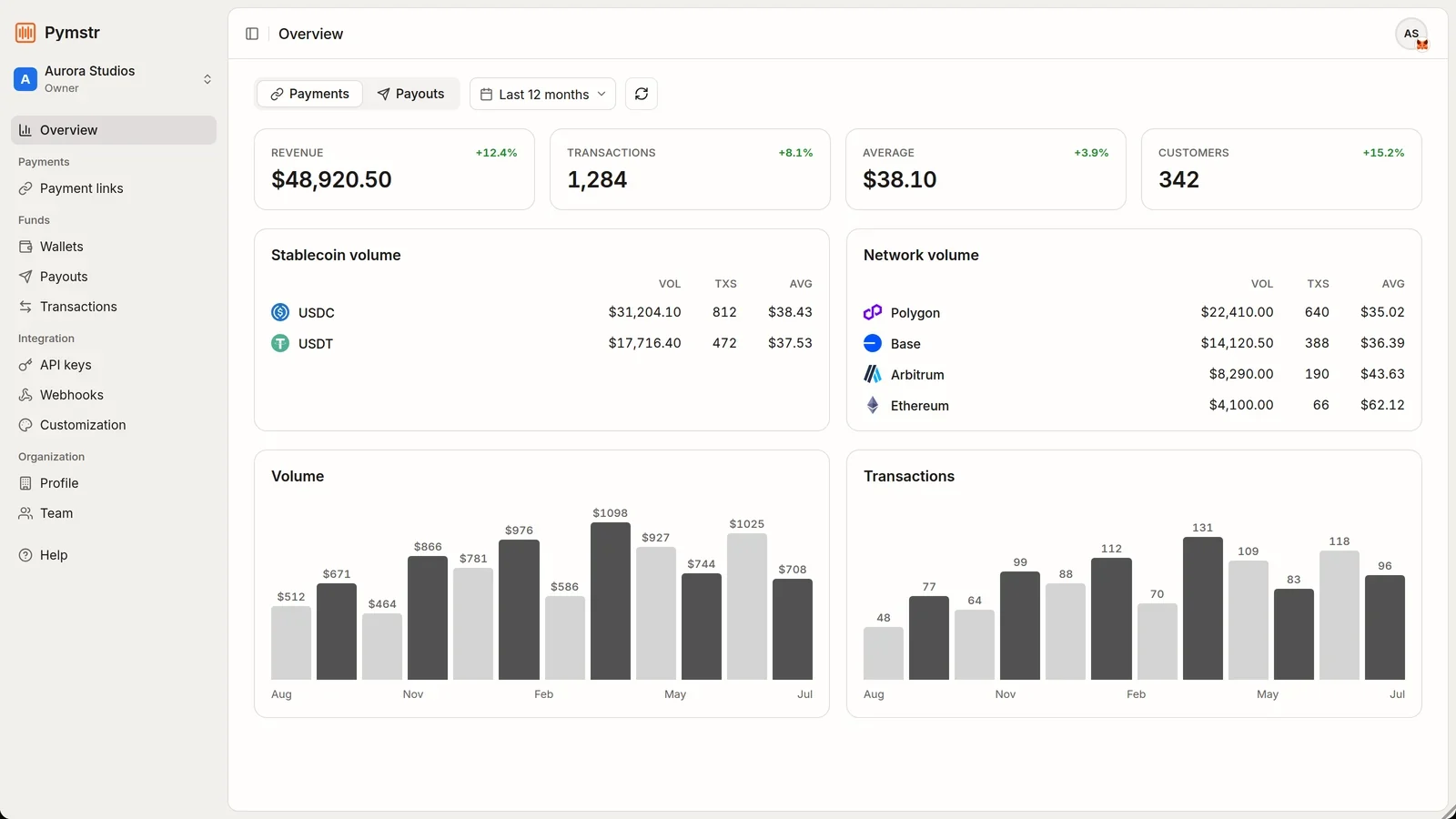
Why this exists
On the card rail, every transaction carries reversal risk for the merchant. Visa and Mastercard chargeback windows run 60 days from the transaction date for standard disputes and up to 120 days for goods-not-received or quality claims. American Express extends to 120 days as a baseline. ACH has its own parallel: NACHA rules let a consumer reverse an unauthorized debit for 60 days (24 hours for businesses). During those windows, a confirmed payment is provisional, not final. High-risk merchants compound this with the operational tax that follows: dispute response queues, evidence documents, $15-100 per-dispute fees, late-night arbitration deadlines, and rolling reserves of 5-15% of monthly volume held for 6+ months as chargeback insurance. When a reserve gets unexpectedly extended or a processor terminates the account at a chargeback ratio breach, the cash-flow shock can take months to unwind. Stablecoin payment chargebacks don't carry the same tax, because the category doesn't exist on the rail at all.
Stablecoin payment chargebacks aren't lower than card chargebacks, or better-managed, or insured against. They're structurally absent. Once an on-chain USDC or USDT transfer is included in a confirmed block, no card network, no issuing bank, no processor, and no PYMSTR operator has the technical ability to reverse it. The finality is a protocol property, not a policy commitment. This matters because policy-level "no chargebacks" promises can be revoked by the entity making them (a custodian can decide to claw back, an issuer can re-authorize); a protocol-level guarantee cannot. The distinction also surfaces an important nuance: refunds and reversals are not the same thing. A refund is a NEW transaction the merchant chooses to initiate (you can send stablecoins back to the customer's wallet at any time, and you control whether to do so). A reversal is a transaction the customer or their bank forces against the merchant's will. On the stablecoin rail, refunds are available; reversals are not. The trade-off is honest: zero-chargeback finality means PYMSTR is not a buyer-protection layer. Use it where finality is appropriate, the way you'd use a bank transfer.
Three steps, on-chain.
Customer pays stablecoins
USDC or USDT is transferred on-chain from the customer's wallet to your wallet.
Transaction confirms on-chain
The blockchain network validates and confirms the transaction in 2-15 seconds.
Funds are yours. Permanently
No intermediary can reverse the transaction. The funds are in your wallet, under your control.
Stablecoin payment chargebacks: reversal mechanics by rail
| Rail | Reversal window | Dispute fee | Reserve held | Final by |
|---|---|---|---|---|
| Card chargeback (Visa, Mastercard, Amex) | 60-120 days | $15-100 per dispute | 5-15% of monthly volume, 6+ months | Issuing-bank discretion |
| ACH reversal | 60 days (consumer) / 24h (business) | $5-25 typical | None | NACHA rules + bank discretion |
| Custodial crypto PSP (CoinsPaid, BitPay, NOWPayments) | Days to weeks at custodian discretion | Varies | None (but hot-wallet hack risk: CoinsPaid $37M, Alphapo $60M) | Custodian decision |
| PYMSTR (non-custodial stablecoin) | None | None | None | Final once the network confirms |
What you get.
Save 2-3% of Revenue
Eliminate the entire chargeback cost structure. Stablecoin payment chargebacks don't exist, so dispute fees, lost merchandise, revenue reversals, and chargeback management overhead all go to zero.
No reserves held against you
Card processors hold 5-15% of your volume as chargeback insurance. On-chain settlement removes that backstop, no reserves needed.
No Account Termination Risk
High chargeback rates trigger processor account termination. When chargebacks don't exist, this risk disappears.
Simpler Operations
No dispute management team, no chargeback response documents, no arbitration process. Payments are final.
Short answers. No jargon.
No reversals to dispute questions.
Yes. Stablecoin payment chargebacks don't exist as a mechanism. Once a USDC or USDT transaction is confirmed on-chain, no card network, no bank, and no payment processor has the authority (or the technical ability) to reverse it. The blockchain is the system of record, and confirmed transfers are final.
Add stablecoin payments to your checkout.
0.5% flat. No chargebacks. Money lands in your own wallet in seconds.